
The Brickman dose for memory and clarity.
1,200 mg of cacao flavanols — the same daily dose the Brickman team used to restore memory function in adults 50–69 (Nature Neuroscience, 2014). Standardized epicatechin for cerebral blood flow and dentate gyrus function.
One scoop. 8 oz warm oat milk or hot water. Morning, before the work block.
The exact daily dose studied by the Brickman team at Columbia. Tastes like a real hot cacao, not a supplement.
What's inside
- 1,200 mg cacao flavanols — standardized to 600 mg (−)-epicatechin per scoop
- CCV-3® micronutrient matrix — the HarmonyMD standardization protocol
- Premium cacao — never alkalized, low-heat processed
- The Brickman dose — replicated by independent teams in PNAS 2023
How to enjoy it
One scoop. Eight ounces of warm oat milk or hot water. Morning, before the work block opens.
Tastes like a real hot cacao, not a supplement. Most people settle into the ritual in week one and start noticing the shifts in word recall and focus around week three.
The published record
- Brickman et al · Nature Neuroscience 2014 — 1,200 mg/day, 12 weeks, memory function in adults 50–69
- Sloan et al · PNAS 2023 — independent replication, cerebral blood flow ASL-fMRI
- COSMOS — 21,442 adults, 3.6-yr follow-up, Am J Clin Nutr 2022
The program
The 60-year-old who remembered like a 30-year-old.
Three months of daily cocoa flavanols restored memory function to that of a typical adult 20+ years younger. Published in Nature Neuroscience, replicated in PNAS 2023.

The dentate gyrus, explained.
The dentate gyrus is a sub-region of the hippocampus that handles pattern-separation memory — the ability to distinguish between similar but distinct experiences. Per research from Columbia's Taub Institute, age-related changes in this region are an early predictor of cognitive decline.
Unlike Alzheimer's-related changes, which affect a different hippocampal region (the entorhinal cortex), the dentate gyrus changes are characteristic of normal cognitive aging. The question Brickman and his colleagues asked: is this aging process reversible?
The protocol, the cohort, the question.
The investigators enrolled 37 healthy adults aged 50 to 69. Each was randomized to a daily drink containing either a high-flavanol cocoa preparation (~900 mg flavanols, including 138 mg epicatechin) or a low-flavanol control.
Baseline measurements: neurocognitive testing focused on pattern-recognition memory tasks, plus high-resolution fMRI scans of the hippocampal sub-regions to measure cerebral blood volume — a proxy for local metabolic activity.
The trial ran for three months.
Memory function, restored.
At the three-month re-test, participants in the high-flavanol group showed statistically significant improvement on the pattern-separation memory task — the same task that declines with normal cognitive aging.
fMRI scans showed a corresponding increase in dentate-gyrus cerebral blood volume in the flavanol group, confirming the cognitive change was anchored in a measurable physiological one.
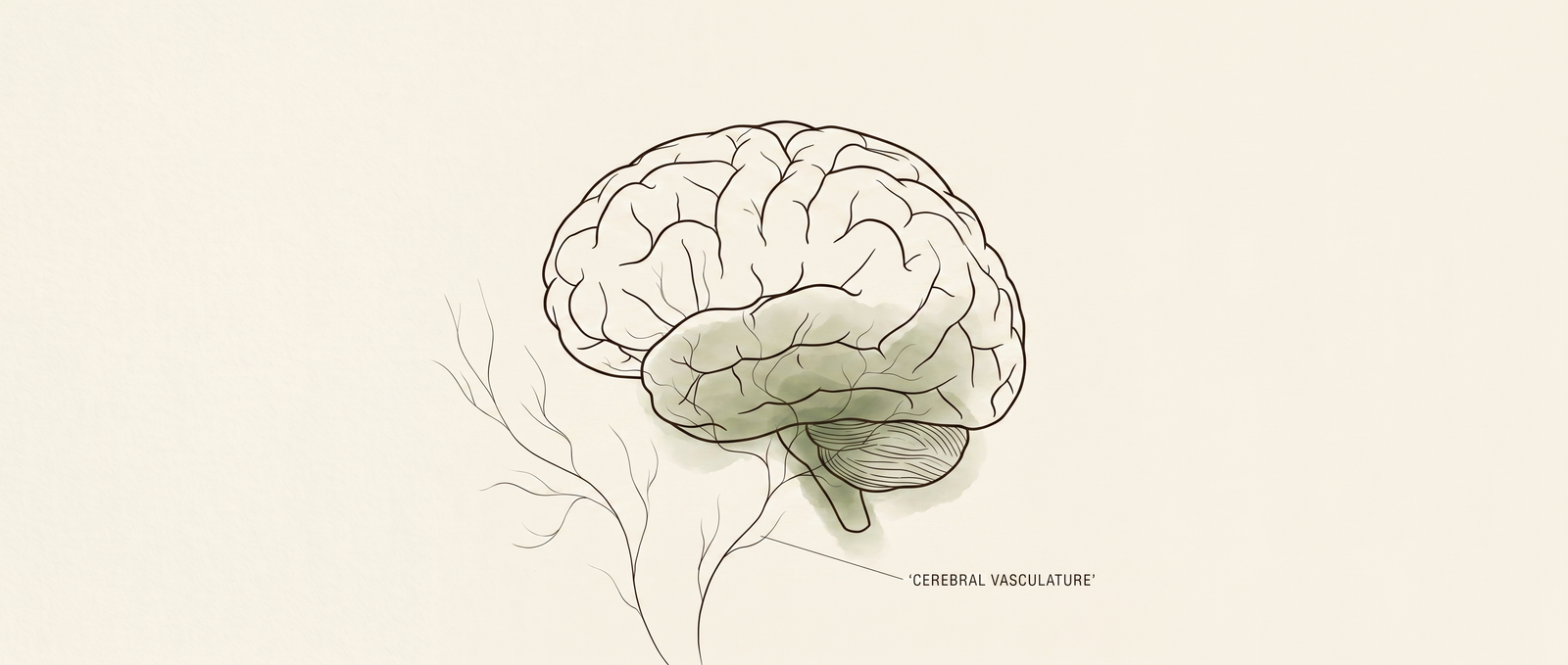
A second study, a larger cohort, same direction.
Per Brickman et al, PNAS 2023: a larger follow-up trial replicated the 2014 finding. Dietary flavanols restored hippocampal-dependent memory in older adults — most strongly in participants with lower baseline flavanol intake (i.e. those eating low-flavanol diets benefited most).
The result was framed as evidence that the cognitive deficit associated with low-flavanol diets is reversible, not progressive.
The cognitive trial used ~900 mg. CCV-3® delivers 1,200 mg per scoop.
The 2014 Brickman trial dosed at approximately 900 mg flavanols with 138 mg epicatechin daily. CCV-3® is standardized to a higher dose and made in a cGMP facility.
One scoop daily. The cognitive standard.
Daily flavanols at the dose the cognitive-restoration research used — and beyond.
Start Your Harmony Ritual →